

UNIDO AIM Global Action Forum · Vienna
When a rice cooperative in Ghana reached new buyers, an optical sorter was only part of the explanation. That case helped me make sense of two days in Vienna on how companies can test industrial AI and train the people who will use it.
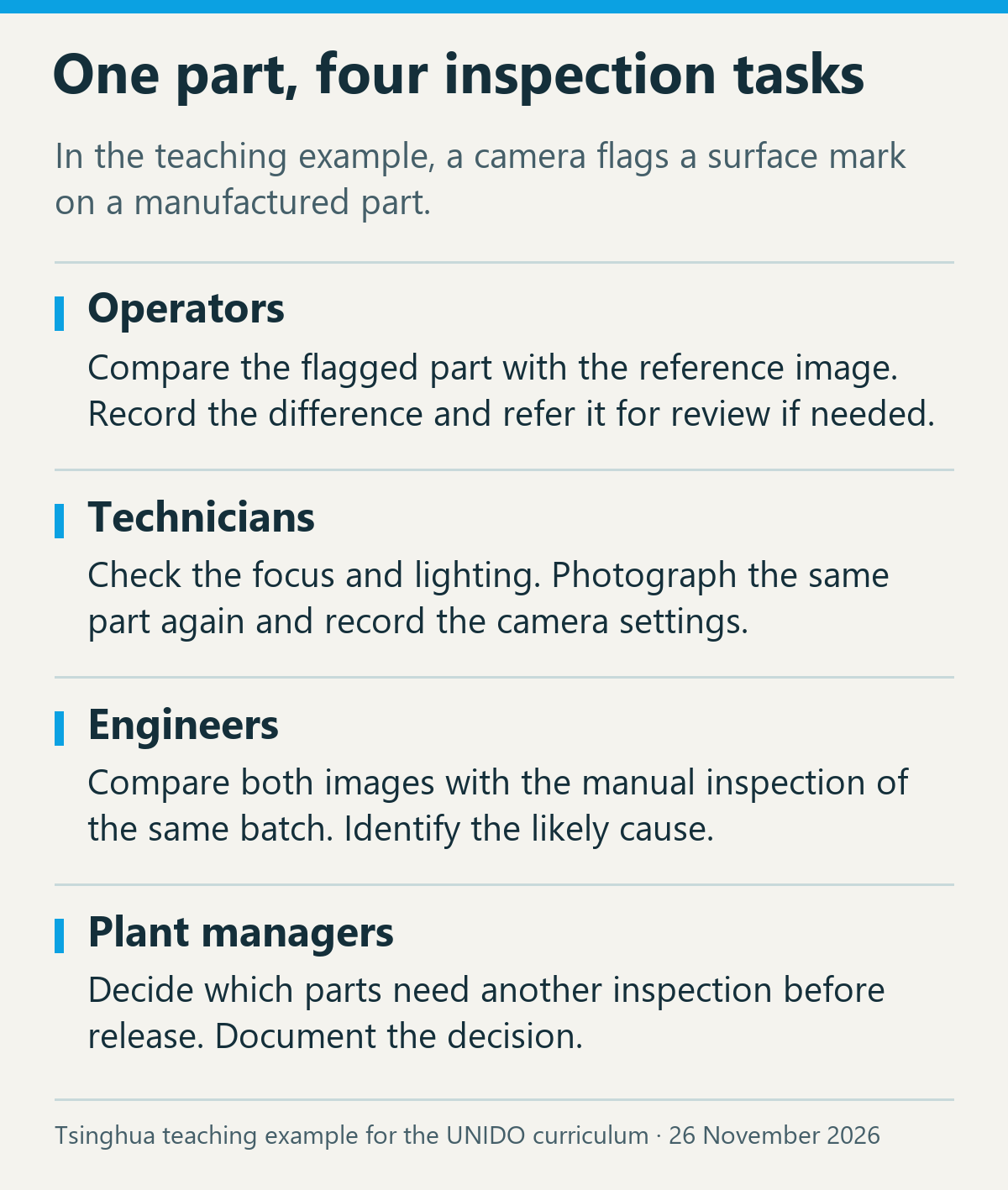
In a simulated exercise from UNIDO’s industrial skills curriculum, a camera on a food production line suddenly flags more products as defective. I’d give the exercise to the incoming shift. The operator has a batch to check and two plausible explanations. The goods may have a genuine flaw. Or someone may have nudged a lamp so that a reflection now looks like a blemish. Comparing one of the flagged products with a piece that passed inspection would be a good place to start.
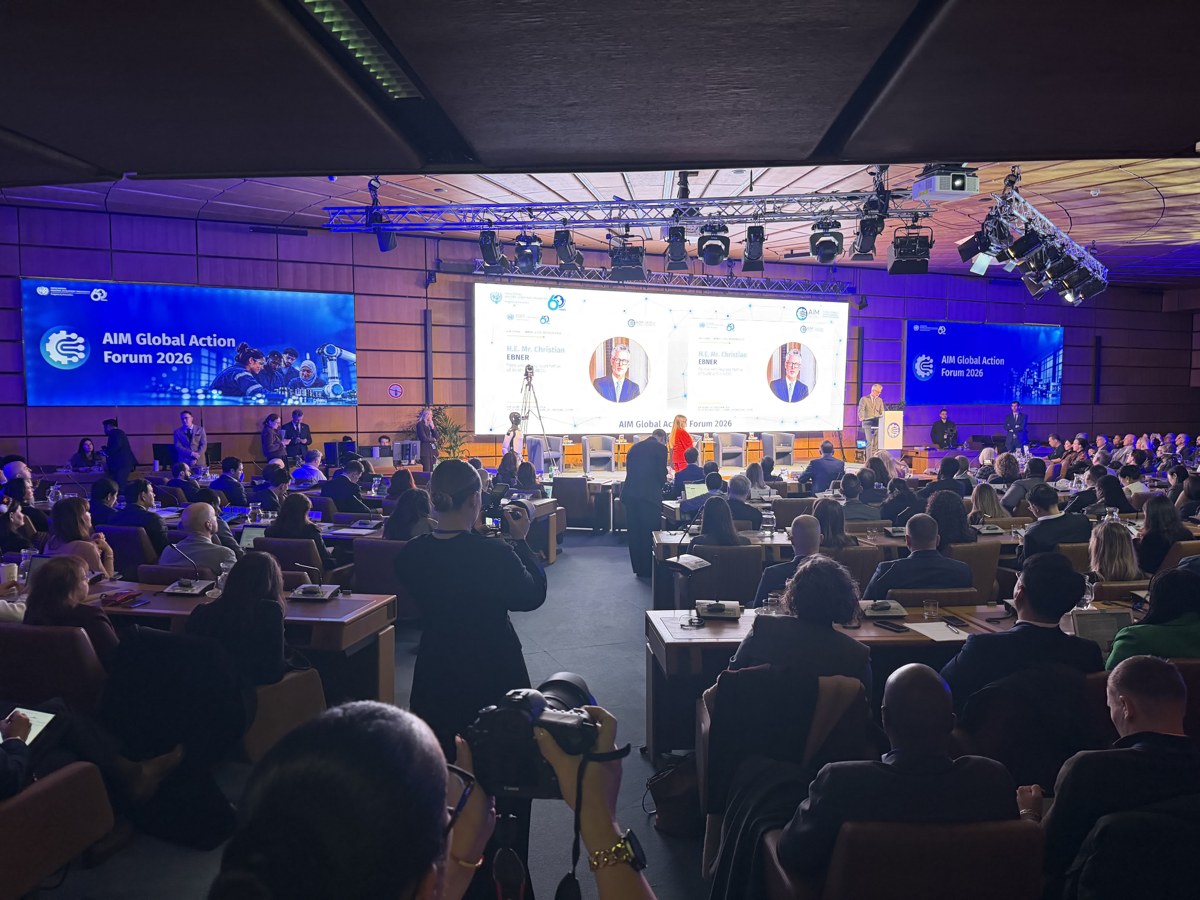
I went to the Vienna International Centre on November 25 and 26 for the AIM Global Action Forum, convened by the United Nations Industrial Development Organization (UNIDO). Its alliance for AI in industry and manufacturing had brought together people from government, industry, research and education. Of all the material we covered in two days, I keep coming back to that operator. Looking into the camera’s decision takes time, some knowledge of how the equipment works, and the authority to hold the batch in the meantime. About the forum · Official program
On the second afternoon, UNIDO invited companies and educators to help develop its AI & Digital Skills Curriculum for Industry. The starting point is the work people do on a particular shift. Training providers and industrial partners can help decide which skills to teach together and which belong to a specific job or industry. The first pilots at the AIM Global Centres of Excellence are planned for early 2027. Curriculum session · UNIDO and Festo on the pilot timetable
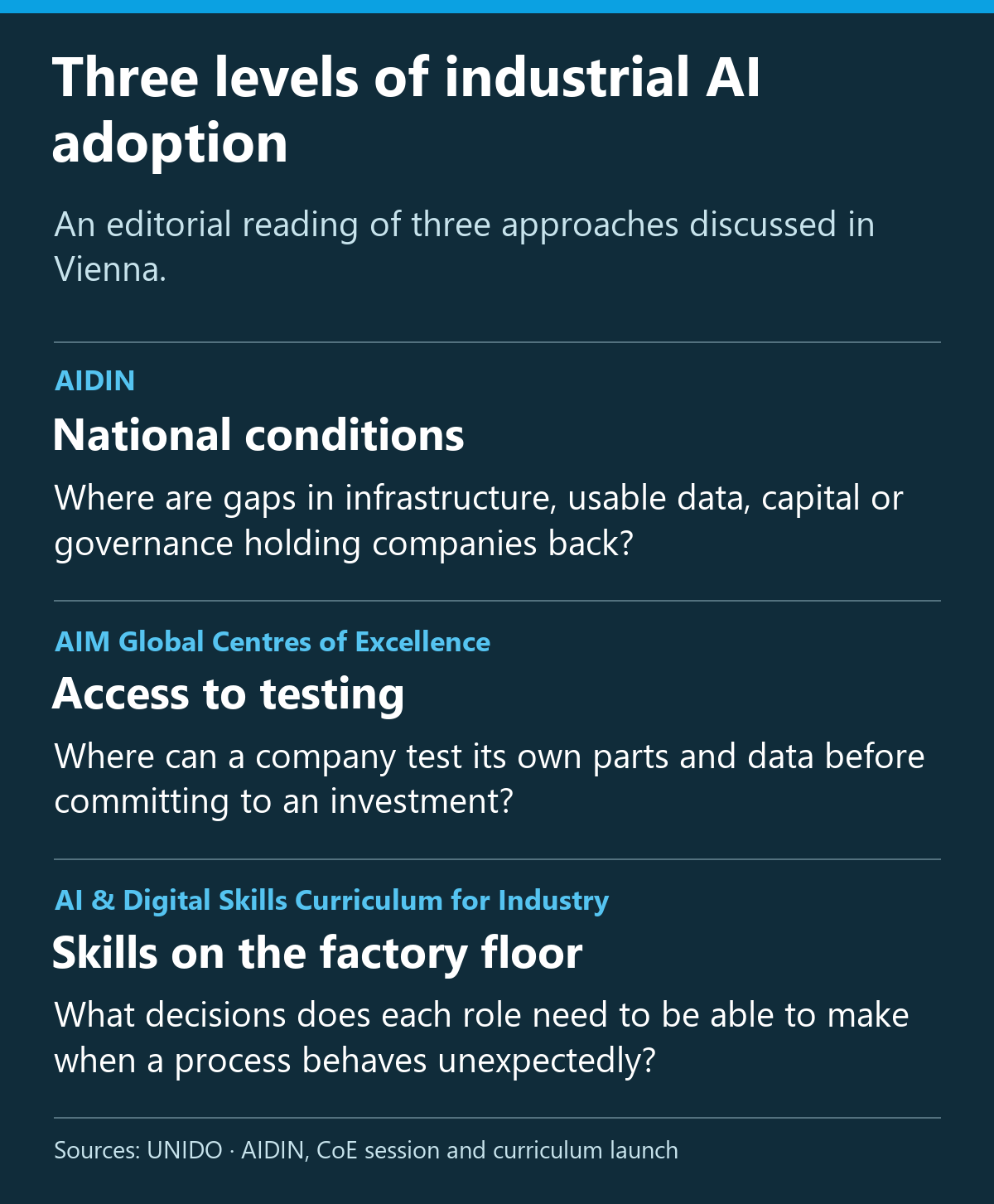
UNIDO also formally launched AIDIN, a tool that helps governments assess what their countries need to put industrial AI to use. The Centres of Excellence serve a different purpose. A business may need access to a test facility, an engineer or a partner willing to run a trial. Both the navigator and the work on the centers were under way before Vienna. AIDIN and the Centres of Excellence · Afternoon plenary
The Global Call for Sustainable Industrial AI-Powered Solutions named twelve winners across five themes. The moderator reported 211 submissions. A manufacturer looking through the entries should pay attention to the organizers’ distinction between emerging solutions and those ready to deploy. A prototype might be an interesting research project. A production manager shopping for equipment will want to see it run on the company’s parts. The UN partners’ original call · Awards ceremony from 04:15:13 · English transcript
The 25 women of the Suglo Viela Rice Parboiling Group in Ghana’s Mion District could spend hours preparing a delivery by hand and still have a buyer turn it down. A small stone or a discolored grain could remain in the finished rice. For this cooperative the commercial problem was getting a consistently saleable product out of the rice it took in. UNIDO’s Ghana case report
The Ghanaian delegation described the project in Vienna. The women improved how they cleaned, steamed and dried the rice and received a destoner and a grader. An optical sorter spots grains of the wrong color and separates them. By September 2025, UNIDO had reported that the cooperative was reaching new buyers as far away as Tamale. Several things had changed by then. The report doesn’t isolate the sorter’s contribution to reaching those buyers. Case report · 25 November plenary from 00:56:31
For the cooperative, the weight of saleable rice per kilogram delivered would tell me more than a count of defects at the sorter. Suppose a problem with drying damages more grain. The sorter could get every decision right that day and the women would still have less rice to sell.
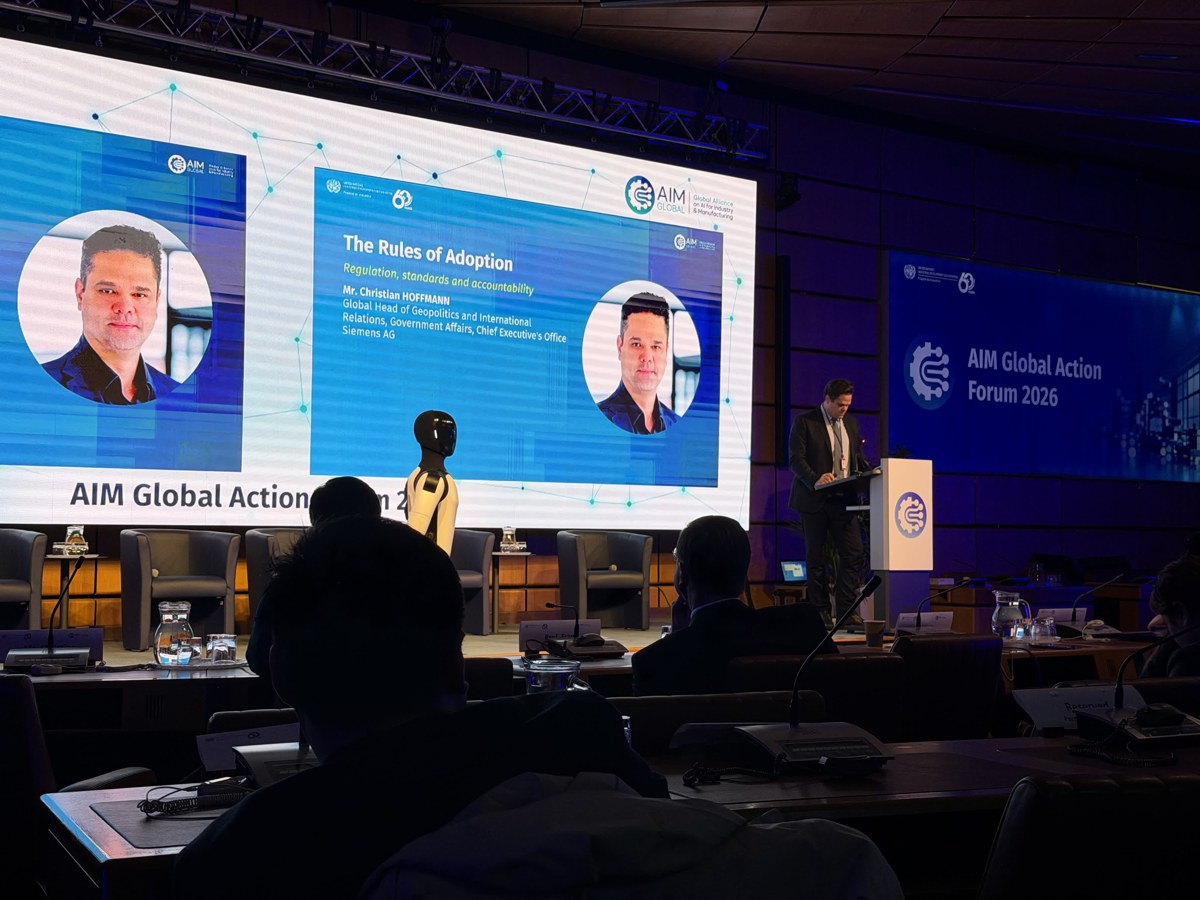
UNIDO’s Jason Slater set out the Industrial AI Action Plan on the first day under three headings – rules, tools and people. The cost of trying a tool struck me as particularly important for small suppliers. Imagine two firms working to the same specification. The customer can set up a test bench and run returned parts through it. The supplier makes those parts on its only production line. To run the same test there, somebody has to give up an hour of production that the customer is expecting. Slater on the action plan from 02:14:03
AIDIN, the AI & Digital for Industry Navigator, looks at the conditions that countries can influence. UNIDO developed it with IBM and Oxford Insights to assess infrastructure, data, the institutions that support innovation, access to capital and governance. Pilot countries and experts saw an early version in New York on September 24. At the formal launch in Vienna, Wernhard Berger explained how governments could use the assessment to set priorities. A region might be training engineers while its manufacturers still have nowhere to take a part for testing. Documentation of the soft launch · UNIDO and IBM · Vienna presentation from 01:40:51
John Higgins distinguished three kinds of governance in the morning plenary – organizational, technical and specific to the application. A shift supervisor needs authority to hold a batch. An engineer needs a record of which model version inspected it. Someone familiar with the product has to decide which defects justify a hold in the first place. Erika Kraemer-Mbula addressed a longer-term concern. A new tool can get today’s inspections done faster. When the product changes, people in the plant will need enough experience of their own to adapt the inspection. Morning plenary · Morning transcript, Higgins and Kraemer-Mbula
Gerd Müller and Amandeep Singh Gill discussed the power supply, connectivity, production data, skilled people and investment on which such projects depend. A speaker from Eswatini described a laboratory being developed for testing and conformity assessment. If a customer requires proof that a part meets a specification, even a supplier with an excellent part needs a way to have it tested. Morning recording, including discussion from 02:17:42
At the Centres of Excellence session, the starting point for an Ethiopian textile operation was getting dependable data about its own production. Another speaker described fitting sensors to existing equipment and analyzing the readings on site. Once a system has learned how the machine normally behaves, it can flag a change. I’d bring the person who ran yesterday’s order into that conversation. They could tell us whether the machine had been running a different job before we send maintenance looking for a worn bearing. Centres of Excellence session · Examples from 01:16:14 and 01:24:45
If a supplier can bring its most troublesome part to a regional center and take home enough evidence to make a purchasing decision, that would justify the trip. In practice, somebody has to book time on a test bench, find a person who understands the process and agree who can see or reuse the production data. A trial can earn its fee by saving a company from buying the wrong machine.
Emily Kate Genatowski shared the stage with an AGIBOT humanoid for part of the Physical AI session. The idea I’d take back to a plant came from Franz Haas of Graz University of Technology, who discussed workpiece and tool changes. Even a trial with one part gives a robotics team plenty to do. The robot has to locate it, grip it and coordinate its movements with the machine controller. I’d include an interrupted cycle in the trial and ask the people on shift to demonstrate how they could restart it safely. Session program · Haas from 02:33:01
Bianca Maria Colosimo spoke about how well people and machines can work together and how much depends on knowing the particular process. Vera Tamarit described choosing robotic platforms for safeguards work at the International Atomic Energy Agency. Her account continued well past the choice of machine. It included integrating sensors, testing with the people who would use the equipment and planning support over its working life. A good commissioning plan should say which of those jobs the plant’s own team will inherit and how they will learn to do them. Colosimo from 02:07:15, Tamarit from 02:50:14 · My account of the robotics discussion in Hannover
Paul Conneally opened the curriculum session, and Zilong He described its design. A needs assessment with six modules informs a common core, sector-specific modules and local adaptations. The team used simulated plant data and company responses to illustrate the approach. One advantage of the food-line example is that a trainer can hand the same incident to four people and give each a different job. Official curriculum session · Teaching example from 02:58:48
The operator can compare a flagged part with the reference image and pass on a record of what looks wrong. The technician can check the focus and lighting and run the same part under the camera again. Engineering can compare both images with a manual inspection of parts from the same batch and look for a cause. Plant management needs those findings to decide which additional parts to inspect before release. Replacing an entire batch, reworking some of it and making a customer wait are quite different decisions.
In the morning discussion of future work, Oliver Niese traced the connections between sensors, networked machinery and controls. Chioma Okoro described introducing AI one process at a time and teaching people to assess its data and recommendations. Zoi Roupakia distinguished basic skills, skills learned for a particular job and those people need when they move between jobs. I’m especially interested in what happens to a new hire on that food line. Someone who has worked through a disputed batch alongside an experienced inspector will have a much better chance of spotting a bad recommendation on a later shift. An employer can make time for that while introducing the system. Future of Work session · Morning recording from 03:14:18 · My article on AI, skills and training
In the future, where physical AI and artificial intelligence are playing a crucial role, it will be absolutely important to look into education. And this is also discussed here at UNIDO’s Global Action Forum on the use of AI in industry.
In a separate BRICS Centre for Industrial Competences (BCIC) session, a consultant described a pilot with an Indian automotive supplier. The team took stock of which machines already produced usable data and where that information stopped moving. The supplier came away with a plan that ranked investments in machine connections, production data and energy monitoring. That order matters to the person signing the purchase orders. A tool for analyzing energy use is a poor first purchase if the readings it needs are still sitting on separate machines. Pilot case in the transcript from 01:32:13
The consultant presented the modernization plan and gave no before-and-after figures for energy use or output. A Chinese supplier described a different outcome in the same session. An introduction to a South African company had led to talks and tests. I’d be interested in a follow-up with those companies after the trials, including any that the partners chose to stop. BCIC recording from 01:36:43
Warm, damp air enters a refrigerated truck each time the driver opens the cargo door. A conventional controller can respond when the temperature starts to rise. Dominik Radler of PBX described a system that anticipates a door opening and prepares the refrigeration equipment for the extra load. In the design he presented, the vehicle makes the prediction locally and can draw on thermal storage. A temperature record for the goods, from loading through to the last stop, would show how well it worked over a delivery round. Sustainable Cooling session · PBX presentation and discussion
Tao Ren of Haier described cooling at the scale of a building. He followed the progression from connecting an individual appliance to adapting its controls to the load and coordinating several units. Both speakers quoted performance figures for their companies’ systems. To use a savings figure in a business case, I’d need to know what installation it was measured against, whether occupants had the same level of comfort, and how much electricity the complete installation used, including the controls. Cooling transcript, contributions by Tao Ren and Dominik Radler
For a fair comparison between trucks, the routes, loads, weather and frequency of door openings would have to be similar. The measurements would include total energy consumption as well as the temperature of the goods. I’d also count the times the system prepared for a stop and the door stayed shut. The session covered training for service technicians, too. Someone still has to recognize a failed sensor and get the truck back on its route.
In New York I argued for a one-page explanation of a technology for the people who will live with it. I’d use that same sheet of paper in a purchasing meeting. Someone who inspects parts for a living could sit down with the buyer and describe the part, the defect that gives them trouble, how they catch it today and what they want the machine to do. By the time a vendor joins the conversation, there is a job on the table that everybody understands. My one-page proposal from New York
For the trial, one product family would do. Set aside samples that experienced inspectors have accepted and others they’ve rejected. Agree in advance which faults must never get through. I’d keep the cases where an inspector overrules the camera and record how much time it takes to find out why. For a final test, give the night shift a disputed batch and have the project team observe while the operators investigate and restart the line on their own. The people who will be doing that job all year deserve a say in whether the company buys the system.
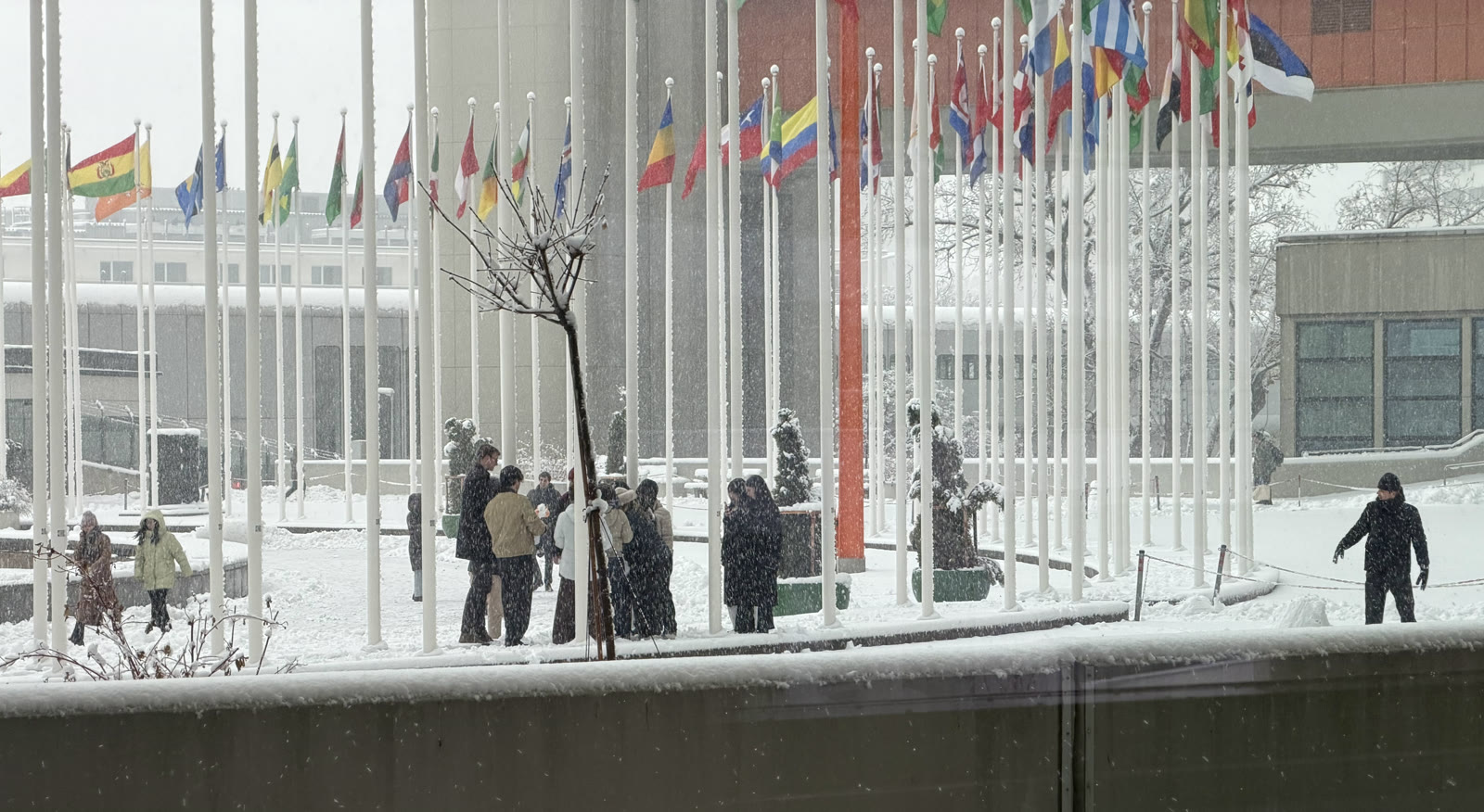
On November 26, UNIDO formally introduced AIDIN, its navigator for assessing national readiness to adopt industrial AI. It also invited training providers and companies to help develop the AI & Digital Skills Curriculum for Industry. The first curriculum pilots at the AIM Global Centres of Excellence are planned for early 2027. Curriculum and pilots
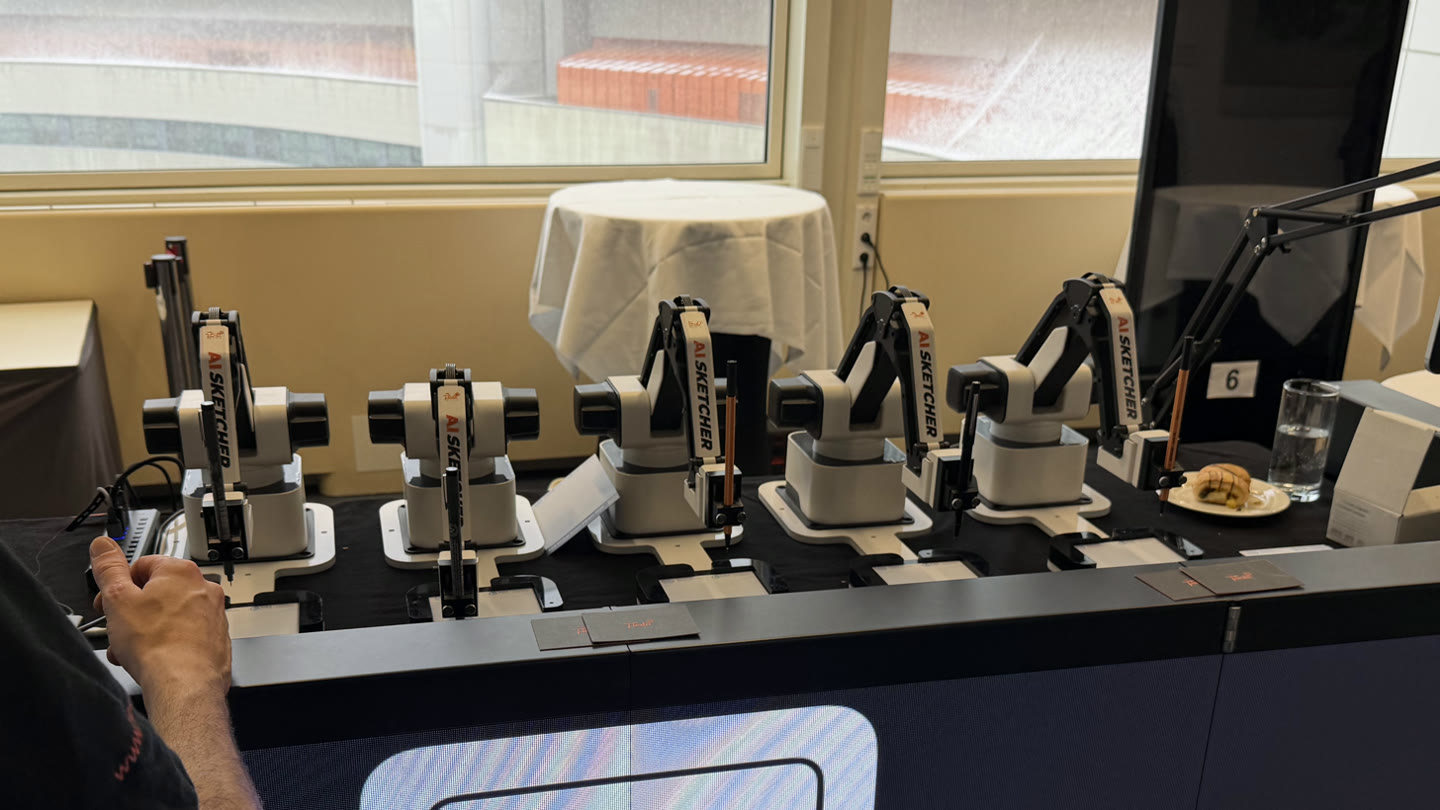
Bring a recurring production problem, some representative parts or data, and a specification for a successful test. Ask what equipment and expertise the center can provide and who would have access to the results. The examples discussed in Vienna ranged from gathering basic production data to fitting sensors to monitor existing machinery. Centres of Excellence
In the simulated food-plant exercise, the operator checks a suspect product against a reference. A technician checks the camera and lighting, an engineer investigates the cause, and the plant manager decides what else to inspect before release. Each person has to give the next person enough information to act. Curriculum session
UNIDO reported in 2025 that a rice-processing cooperative in Ghana had reached new buyers after changes to processing, equipment and training. The Indian automotive supplier featured at the forum had a prioritized investment plan. Its account covered the planning stage. Results from the curriculum pilots will have to wait until people have used the training at work. Ghana case report · BCIC case discussion
The five recordings below have searchable English transcripts. Each timestamp is measured from the beginning of the corresponding video. The November 26 morning transcript stops at 03:43:47 during the future-of-work discussion. For the cooling session, search the transcript by speaker or company. The transcripts are automated, so it is worth checking the audio for a name or a figure you plan to quote.
| Session and where to start | UN Web TV | Session text |
|---|---|---|
| 25 November · Main stream. Ghana from 00:56:31, Industrial AI Action Plan from 02:14:03. | Recording | Transcript (EN) |
| 26 November · Morning plenary. Infrastructure and governance, Future of Work from 03:14:18. | Recording | Transcript (EN) |
| 26 November · Afternoon plenary. Centres from 00:40:15, AIDIN from 01:40:51, Physical AI from 02:07:15, curriculum from 02:58:48, awards from 04:15:13. | Recording | Transcript (EN) |
| 26 November · BCIC in Action. The centre from 00:51:19, the Indian supplier from 01:32:13. | Recording | Transcript (EN) |
| 26 November · Sustainable Cooling. Search the transcript for “Haier” and “PBX”. | Recording | Transcript (EN) |
New public dates will be announced here. Explore past appearances and selected resources in the archive.
Hannover · Schloss Herrenhausen
Vienna/Vösendorf, Austria · Eventhotel Pyramide
Vienna · Vienna International Centre (VIC)
Helsinki, Finland · Clarion Hotel Helsinki
Munich · Design Offices München Atlas
Gütersloh
New York
Dominik Bösl
Olympiastrasse 6a
DE-86179 Augsburg
Email info@boesl.org
Imprint Privacy Policy ©2026 | Dominik Bösl. All rights reserved.