After Hannover: What Robotics Must Deliver Over the Next Ten Years
After Hannover: What Robotics Must Deliver Over the Next Ten Years
INDUSTRIE DIGITAL 2026 brought the future of robotics into practical focus: how do technical capabilities become dependable applications, better work and economic value? My reflections on the event, with a personal outlook to 2036.
A shoelace is a surprisingly good test of how we imagine the future. When a robot ties one, we see a remarkable technical achievement. In our minds, the next steps can follow almost automatically: surely the machine could also fold a shirt, process a returned item or run a household. Much of the work we discussed in Hannover lies between those propositions.
On 11 November 2026, I joined INDUSTRIE DIGITAL at Schloss Herrenhausen. NiedersachsenMetall, Lower Saxony's Ministry for Economic Affairs and Niedersachsen.next had organised the congress around the question “ROBOTICS! How will industry work in 2030?” For me, it became a day of different perspectives and a welcome shared willingness to examine the details before settling on a vision of the future.
Before returning, I had reviewed my robotics predictions from 2018. This second article starts with this year's conversations and asks what we can learn for the next decade.
The organiser's report focuses on productivity and industrial competitiveness. Our discussions raised further questions: who controls the relevant data? How do employees learn to work with new systems? How do we test applications responsibly? And how do we explain the choices that society should be able to debate?
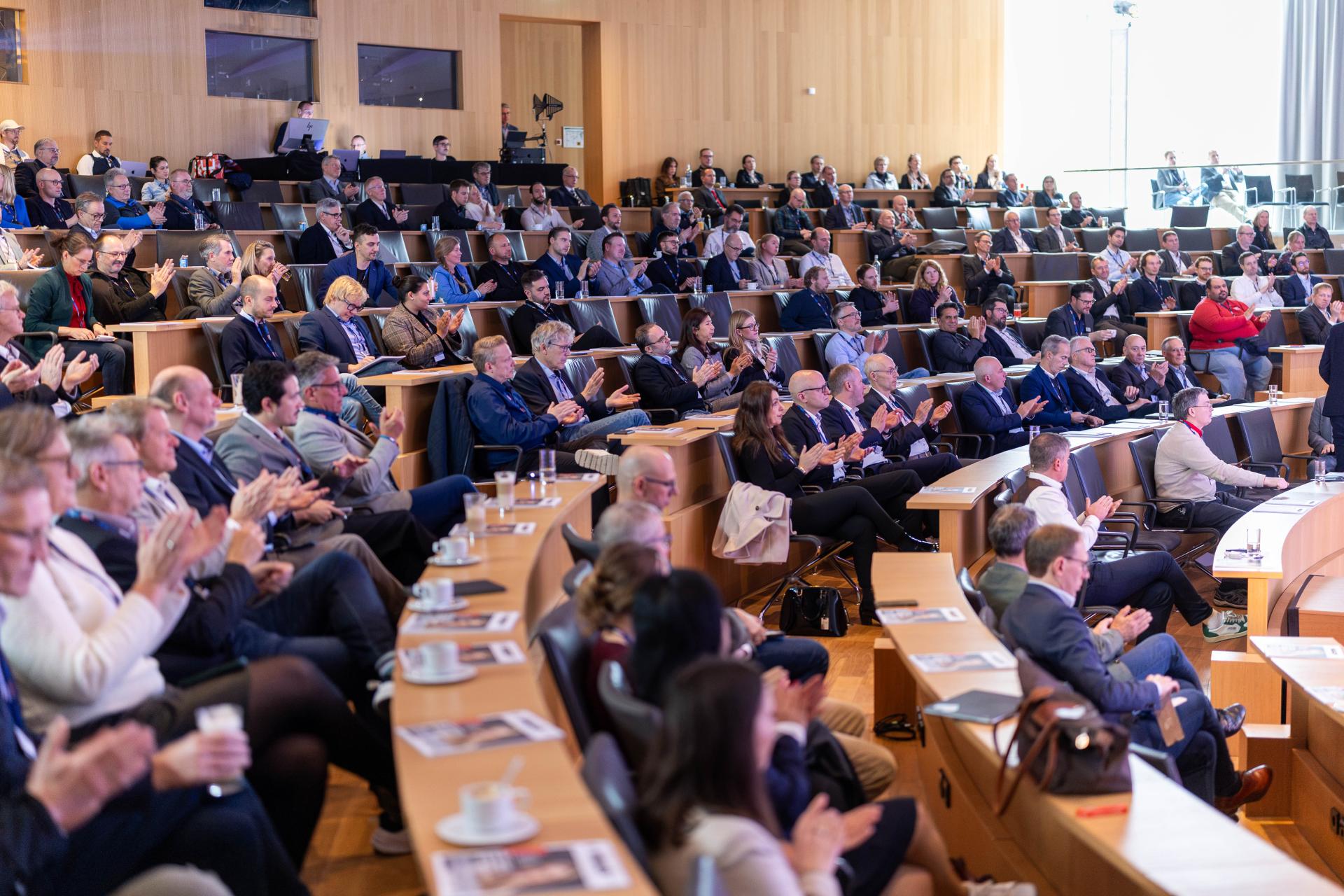
Good dialogue makes room for disagreement
Philipp Klöckner's “Beyond the AI Hype” provided plenty to think about. I found his connections between AI development, economic conditions and industrial software capabilities interesting. In robotics, our assessments diverged at a particular point: how far can success in one manipulation task support expectations about other tasks involving deformable objects?
A fair account must acknowledge the qualifications Klöckner made himself. His presentation explicitly distinguished announced production capacity from robots actually delivered. My concern is the transferability of a demonstrated capability. That is a useful place for technical disagreement, because an expectation can eventually become an investment decision.
The moderation made room for such differences. I considered that a strength of the event: varied voices, constructive disagreement and an audience willing to engage with a realistic assessment. Interest in robotics and Physical AI was substantial, as was the desire to understand the conditions for useful deployment.
I also welcomed the call to action I took from Economic Affairs Minister Grant Hendrik Tonne's contribution. The official ministry release links robotics to benefits for employees and companies, knowledge transfer and suitable conditions for innovation. My practical conclusion is to begin, gather experience and use it to improve the next decision.
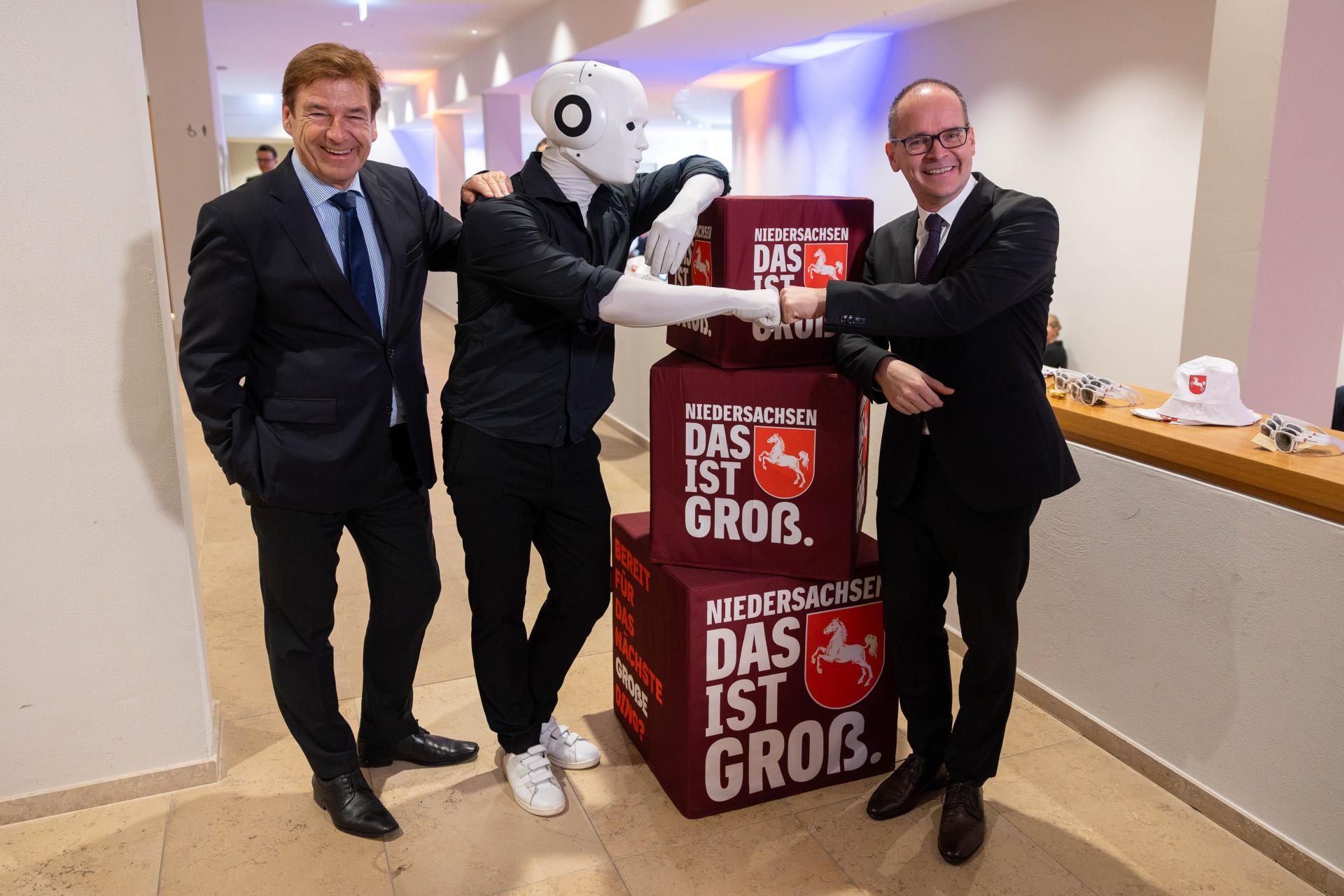
Three numbers and the question behind them
The IFR's World Robotics 2026 report records roughly five million industrial robots operating worldwide in 2025. Operational stock grew by nine per cent; annual installations rose by eleven per cent. These are different measures and should remain distinct, even in an enthusiastic debate.
China accounted for 59 per cent of global new installations. Germany recorded 24,800 new industrial robots, eight per cent fewer than the previous year. These figures describe industrial robots and where they were installed. They do not describe an army of humanoid household helpers or, by themselves, explain every cause of Germany's investment trend.
For companies, I draw a more specific question from them: where is a useful automation opportunity being left unrealised in our own operation, and why? Is the obstacle technical, commercial, related to data or integration, or a task whose conditions we have yet to describe properly? That diagnosis makes a decision possible.
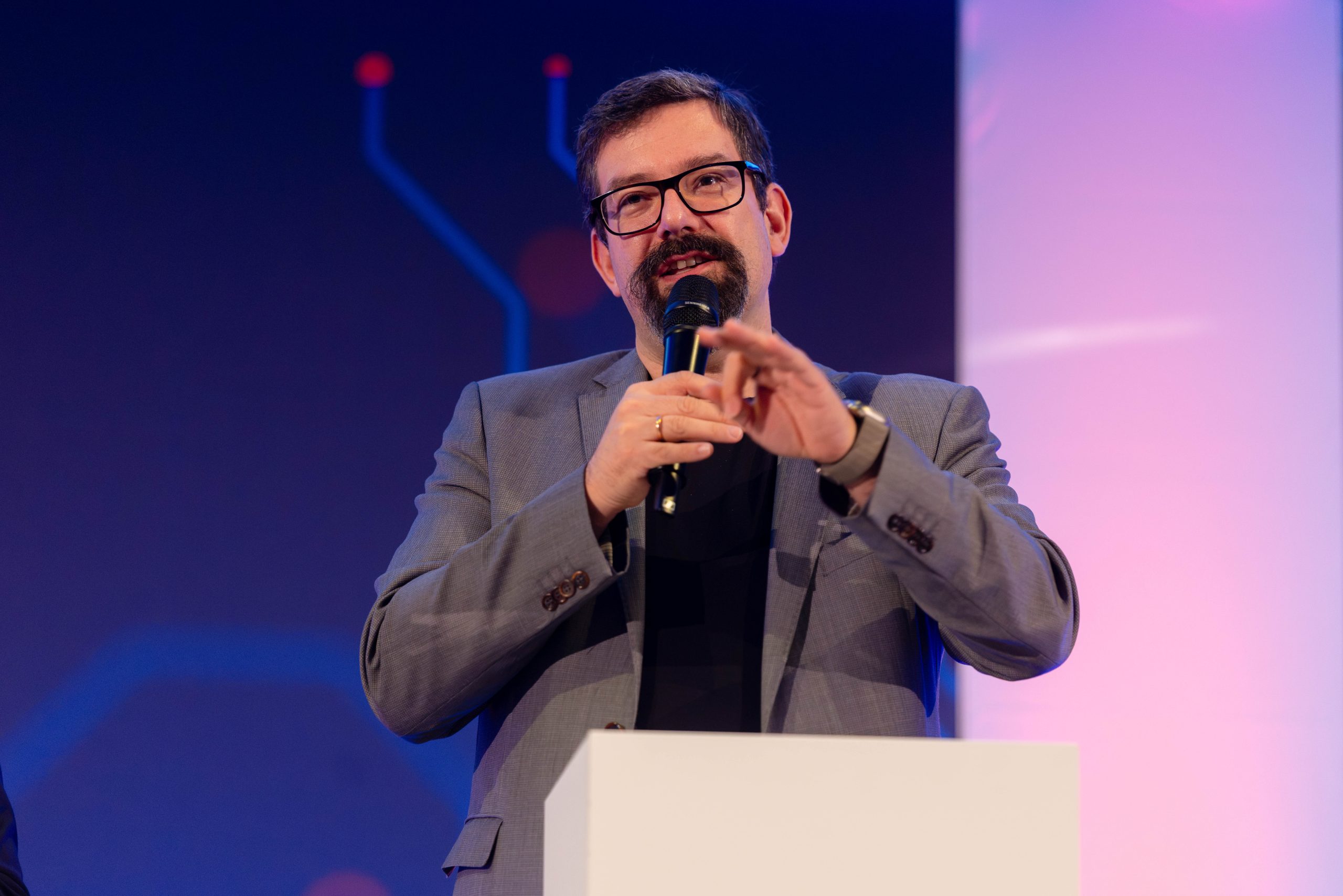
A clear assignment for a fascinating machine
My recommendation in the robotics forum was practical: describe a specific part of production you want to improve. Define what a good solution must deliver. That gives you a meaningful assignment to discuss with a supplier.
It sounds modest, but it is demanding. Wanting to deploy a humanoid robot tells us little about the benefit. Wanting to deliver particular parts to a workstation, on time and under defined conditions, opens a technical and economic investigation. A human-like form may help, or another configuration may be better. The task should guide that choice.
Simpler alternatives belong in the comparison. A different feeding arrangement, a redesigned workstation or a specialised robot may remove the same bottleneck. Assessing those options early gives a robotics project a stronger justification. I am enthusiastic enough about technology to recognise the temptation to reverse the sequence: acquire the machine first and then search for its purpose.
The economics also deserve scrutiny. Integration, training, maintenance and disruption come on top of the purchase price. Benefits may include less scrap, better ergonomics or time specialists can spend on their core work. Which benefits materialise must be established in the process concerned. A business case becomes more useful when its assumptions are explicit.
What shoelaces and shirts tell us about progress
The point raised in the closing discussion does not require a sweeping verdict on robotics research. Both a shoelace and a shirt can change shape, yet they present different challenges. The system must identify the object's configuration, choose a grasp and anticipate how its next movement changes that configuration. A successful method for one task does not establish dependable operation for the other.
This matters beyond robotics. We observe an impressive performance and mentally add capabilities that were never demonstrated. A human-like machine makes that especially tempting: two hands suggest universal dexterity. Its actual dexterity must be assessed through tasks.
I want to describe progress more precisely. Which variations can the system handle? How often does it need assistance? Does it recognise failure? Can it recover independently, or must someone restore the initial conditions? These questions give technical achievement its due by making clear what has been accomplished. They also indicate where development should go next.
Over the coming years, I would welcome greater attention to the work between mastering a movement and reliably completing an assignment. A short video rarely reveals all of it.
Knot manipulation and shoelace tying are longstanding research problems. An original university repository documents a shoe-tying prototype presented in 2014. That does not diminish today's advances. It illustrates why the existence of a demonstration and its readiness for industrial use are separate questions. The freely accessible abstract of that historical prototype does not establish industrial continuous operation.
Give suppliers a task to solve
My recommendation can therefore become a practical test: formulate a problem precisely enough to assess an offered solution. Give suppliers the same task, the same variations and the same success criteria. Let them demonstrate what works under those conditions.
The task might involve inserting a cable, handling a hose or automating a step in shoe production. These are examples of assessment tasks, rather than claims that each is fully automatable under arbitrary conditions. Your process determines which task makes sense. Describing it with employees often teaches you more than another broad promise.
Agree the measures before the trial. What quality is required? How many variants must be handled? What cycle time is necessary? How often may a person intervene? How long does recovery take? What do commissioning, changeovers and rework cost? How much physical or organisational strain does the application actually remove?
Compare against the current workflow and suitable alternatives. The trial report should include human interventions and failed cases. Otherwise, we may be comparing a complete operational process with a carefully selected excerpt.
A legitimate outcome is a decision to defer automation. Volumes may be too low, variation too high or costs excessive under current conditions. That is still a result. Companies needing support can involve integrators, research organisations or universities. Courage means investigating the question seriously and acting on the answer.
Production knowledge becomes an advantage when we use it
As the organiser's report records, Klöckner argued that German industry should help shape an industrial robotics data and software platform. That is his position. It connects with a question I approached from the application side in the forum: what do we do with our production knowledge?
People who have operated a process for years know its deviations. Employees recognise an unusual sound, a troublesome material variant and the reason for an apparently minor manual action. This knowledge can be decisive in developing a robotic solution. Collecting large volumes of data cannot simply replace it.
One of the next decade's most interesting challenges is to describe relevant knowledge, connect it with appropriate data and make it useful for development and testing. Failures and edge cases belong in that picture. A dataset containing only smooth operation tells part of the story.
There is also a strategic question: who benefits from the experience generated in a factory? Can a company reuse its data, switch solutions and assess performance independently? Or does each learning step mainly strengthen its supplier? Architecture, contracts and management decisions all matter. Industrial experience becomes a lasting advantage when companies turn it into an ability to act.
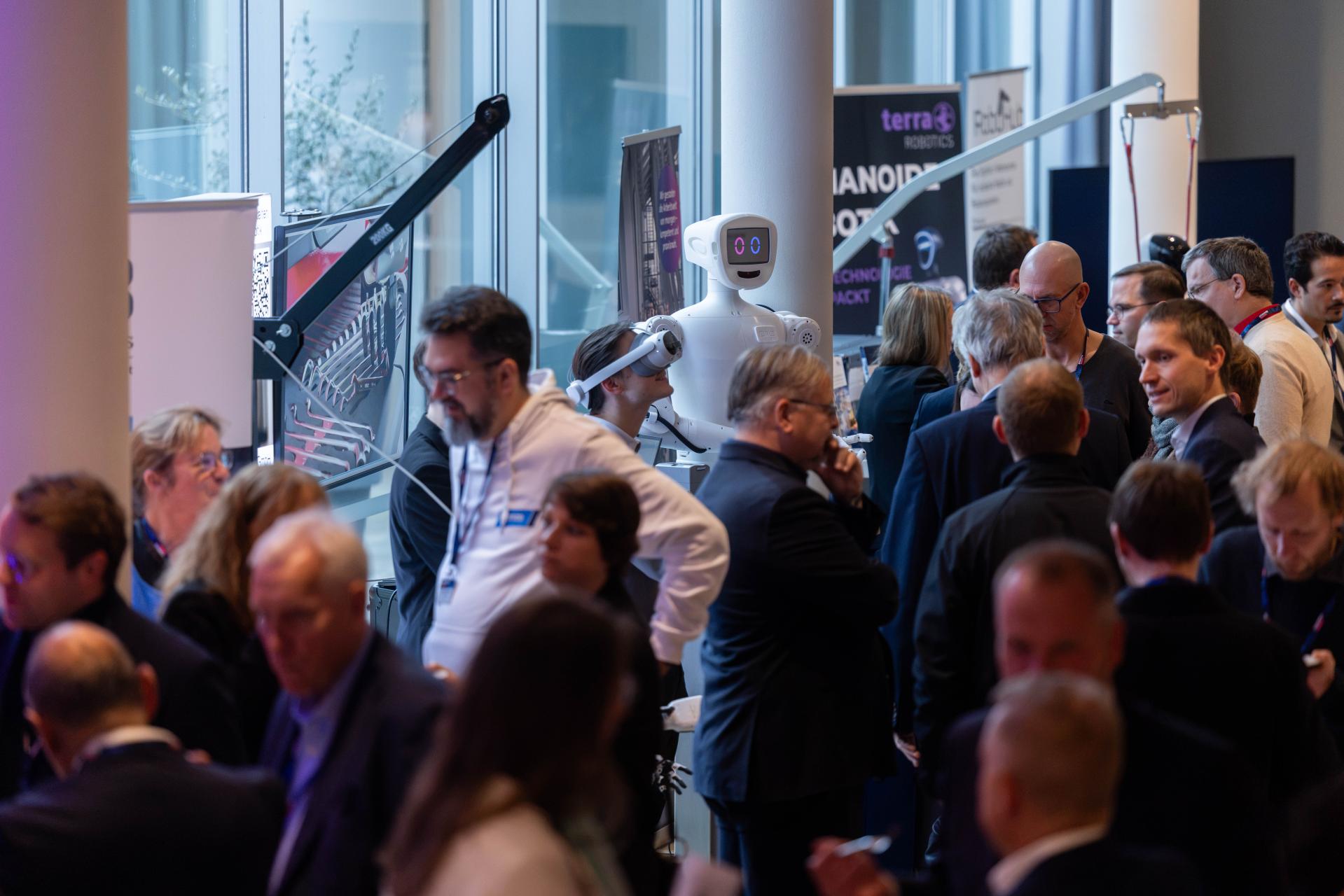
The organisation has to learn too
A pilot can produce two kinds of value: a productive application and knowledge about what that application still needs. Both can be worthwhile. We should agree in advance which we expect and how to recognise it.
A project intended mainly for learning needs bounded resources and a specific question. Can this component variant be recognised reliably? How much assistance does recovery need? What data are missing? Afterwards, the company should be able to decide whether to continue, adjust the scope or stop. A justified decision to stop can be good investment management.
Early employee involvement also featured in the forum discussions. My conclusion goes beyond acceptance: people at the workstation know many conditions the system will eventually encounter. Involving them only after technology selection wastes knowledge.
Universities and vocational education have a role here. Students and trainees should learn to question demonstrations, formulate requirements and test results under changed conditions. A laboratory robot provides a useful starting point. Learning comes from observing, explaining, measuring and improving it. My article on AI, skills and the future of work develops the education perspective.
Responsibility belongs in the trial
In the closing discussion, I was asked whether voluntary commitments would suffice for further development. I would not rely on those alone. We need experience gathered under responsible conditions and requirements derived from that experience.
For a company, this means specific work: describing the intended use, assigning responsibilities, setting boundaries and handling disruption. Who can stop a trial? Who investigates a failure? Which changes require further testing? Which employee feedback triggers a revision?
Learning systems make these questions more pressing because changes to software or data may affect behaviour. A successful demonstration should therefore open the conversation about operation rather than settle it.
My understanding of Robotic Governance connects technical development and societal responsibility. It includes willingness to experiment and the ability to set reasoned limits. Trust becomes more substantial when people can understand deployment conditions and what happens when something goes wrong.

One page that opens a conversation
Towards the end of the robotics forum, I returned to my call for participatory technology dialogue: public technology funding should be tied to an understandable one-page explanation. Anyone receiving public money should explain to the public what is being developed, the expected benefit, the limitations and the questions still open. This is my policy proposal; it is not a claim about an existing funding rule.
I include myself in the criticism. Researchers and industry professionals can talk at length about their work while leaving essential questions unanswered. What can the system do? Where are its limits? Who benefits? What consequences need discussion?
The page should enable informed debate. People may be interested in a technology, oppose a particular use or ask for different priorities. They need an accessible account of the subject to form that judgement. I explored the proposal in my New York and UN article on understandable technology funding.
For me, this is a practical part of democratic technology development. We need better conversations about technical possibilities, social preferences and what makes sense in a particular context.
I was pleased that the proposal received applause in the forum. It reinforced my view that explanation is a serious part of our work. Participation becomes meaningful when people can access the subject and form their own opinion.
My deliberately pointed concern about human foolishness also met with approval: irresponsible use of technology often worries me more than the label “artificial intelligence”. That gives technology designers no exemption from responsibility. Safety, misuse, incentives and harmful applications must be considered in development and deployment. Responsibility begins long before someone deliberately does something harmful.
My outlook to 2036: moving into less orderly worlds
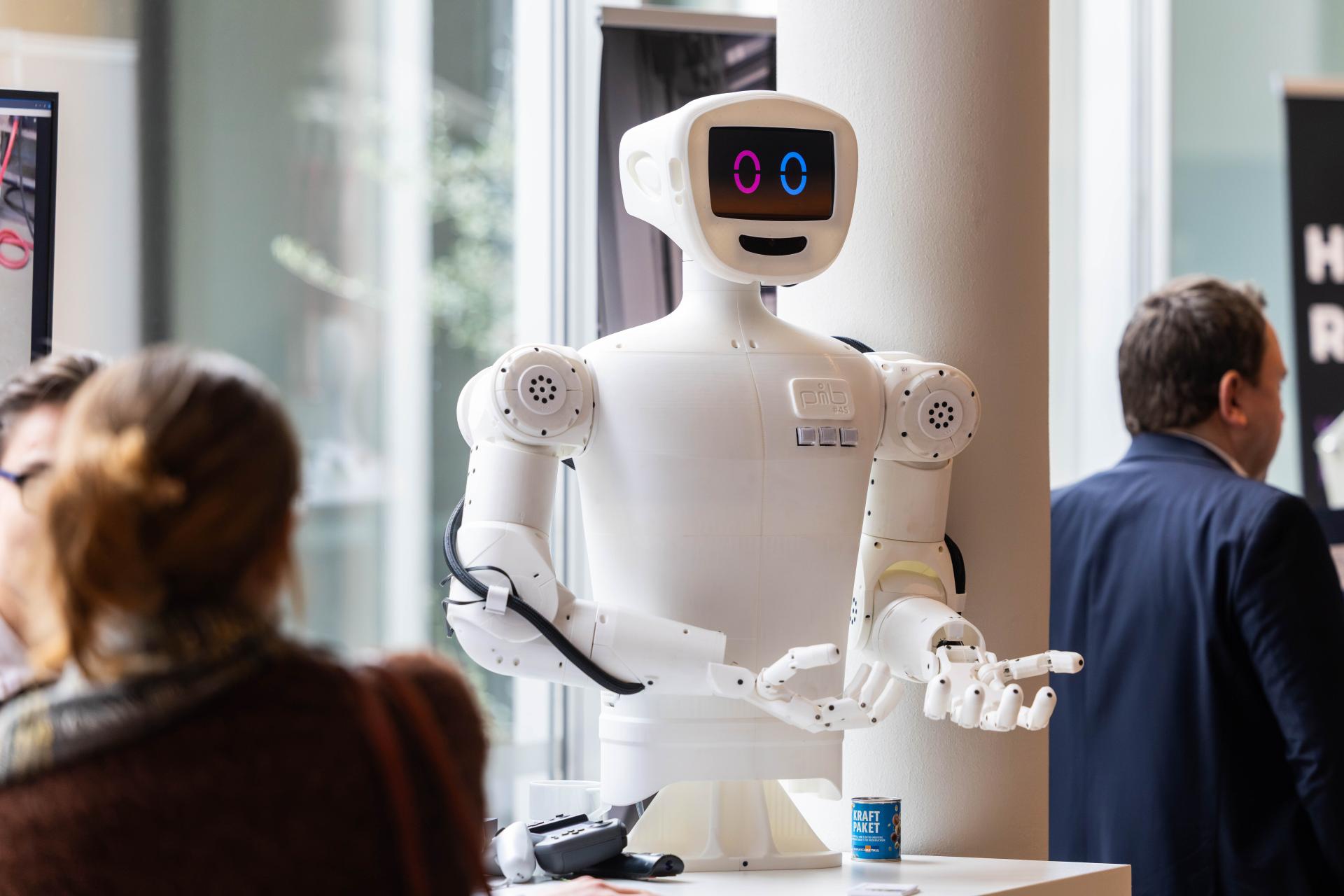
When we meet again in ten years, I expect much more robotic support outside conventional factories: at work, in offices and retail, in suitable hospital tasks and at home. I have bounded, useful applications in mind. Service robotics already exists today. My forecast concerns wider adoption, greater flexibility and more demanding tasks.
The direction is from more controlled environments towards less structured ones. In a factory, we can arrange material feeding, define positions and bound a process. In a shop, customers move around. At home, a chair changes position, lighting varies and somebody puts a cup somewhere unexpected. Factories also contain substantial variation; the distinction describes a direction of development rather than a clean boundary.
I expect progress particularly where a clear benefit meets manageable operating conditions. That need not produce a rigid sequence from factory to office, retail, hospital and home. A narrowly defined task in a difficult setting may succeed before a highly variable task on a factory floor. Actual requirements determine the difficulty.
Showing and explaining instead of specifying every movement
I am particularly interested in how we communicate tasks to robots. I expect Teaching by Demonstration and Teaching by Explanation to become more important. The aim is to make setup and adaptation easier. An understandable instruction alone, however, cannot guarantee safe execution. The system must identify what it refers to, respect boundaries and recognise when it needs assistance.
That gives us a realistic picture of increasing autonomy: more situations handled independently, fewer unnecessary interventions and a clear response to situations outside the system's competence. I expect an evolution with substantial progress at different speeds. I do not expect a single day on which every everyday task suddenly becomes solvable.
The universal household helper remains an ambitious bet
By 2036, I do not expect widespread access to humanoid robots that cook, clean, tidy, feed the cat and cope with every household surprise. Impressive individual applications are entirely conceivable. Combining many abilities with safety, reliability, affordability and highly varied domestic conditions is a much larger requirement.
We should distinguish two concepts here. An agentic system may plan steps, use tools and act within limits. That establishes neither general robotic competence nor consciousness. My scepticism concerns a universal all-rounder that performs reliably in everyday life. It does not deny the usefulness of bounded autonomy. This direction connects with my Four Robotic Revolutions framework.
Dexterity does not establish consciousness
I also do not expect a generally accepted demonstration of feeling or conscious machines by 2036. That is my judgement within an open scientific and philosophical debate. Defining and establishing consciousness is already difficult; possible machine consciousness need not resemble human experience.
Perceptual performance, planning and behaviour should be distinguished from subjective experience. A robot may sense its surroundings and respond to people without thereby demonstrating an inner experience. Useful deployment calls for reliable abilities and responsible operating conditions. It cannot answer every question about consciousness.
Where we can begin
My practical conclusion from Hannover is to choose a useful application, understand its conditions and investigate with employees what it improves. Document the experience. Base the next decision on it. Explain what worked and what remains unresolved.
This is a demanding form of optimism. It welcomes enthusiasm and requires work on the conditions for success. When we meet again in 2036, I want to discuss applications that actually help people. One well-chosen problem is enough to begin with. We have plenty of those.
Further reading and the event video
- INDUSTRIE DIGITAL 2026: official event page.
- NiedersachsenMetall's report and photo gallery.
- Official ministry release.
- Dr Simon Rettenmaier's public participant account on LinkedIn: an additional personal perspective. Quotations reported there have not been adopted as independent evidence in this article.
- Transformationsagentur Niedersachsen's event reflections on LinkedIn, including a link to the congress video.
- Part 1: revisiting my 2018 robotics and AI predictions.
The following video by 3QM / NiedersachsenMetall offers impressions of the congress. It is a short event recap, not a complete recording of the talks or discussions.
Congress photos: Photo credit: Florian Arp. Personal impressions and forecasts reflect my own perspective. Sources and editorial review: 18 November 2026.
Questions and answers: practical robotics and the outlook to 2036
What was INDUSTRIE DIGITAL 2026 in Hannover?
The congress took place on 11 November 2026 at Schloss Herrenhausen, focusing on robotics, AI and industrial applications. It was organised by NiedersachsenMetall, Lower Saxony's Ministry for Economic Affairs and Niedersachsen.next. This article is my personal reflection, complementing the organisers' accounts with technical interpretation and my outlook to 2036.
What separates a robotics demonstration from an industrial application?
A demonstration establishes a capability under particular conditions. Deployment also requires the intended variations, quality, cycle times, disruptions and safety conditions to be addressed. Documented performance, necessary human assistance and total process costs matter. An impressive video alone does not establish those properties.
Can a robot that ties shoelaces automatically fold shirts too?
That does not follow. Both tasks involve deformable objects but require different perception, grasping strategies and failure handling. A system can be developed for both; its performance on the second task requires evidence under the intended conditions.
What does Use Case Driven Robotics mean?
For me, robotics development begins with a specific task and its benefit. Requirements and success criteria are defined before choosing a system. Suitable technologies and alternatives are assessed against them. The configuration, including a possible humanoid form, follows from the application's requirements.
How should companies compare robotics offers?
Give suppliers the same precise task with representative variations. Measure quality, processing time, interventions, recovery, changeovers and total cost against agreed criteria. Compare results with the current workflow and suitable alternatives. The trial may also establish that an application is not yet economical under current conditions.
Why do employees and production knowledge matter?
Employees know variations, uncommon disruptions and manual steps that an idealised process description may omit. Early involvement improves requirements and testing. Suitable data matter for learning systems, but do not replace an explanation of the process and its edge cases.
Which everyday robots does Dominik Bösl expect by 2036?
I expect more specialised support in settings such as retail, offices, hospitals and homes. Clear benefit and manageable operating conditions will guide progress. I do not expect a widely available humanoid all-rounder for every household task by 2036. This is a personal forecast rather than an established future outcome.
What are Teaching by Demonstration and Teaching by Explanation?
Teaching by Demonstration uses examples of task performance; Teaching by Explanation uses descriptions, for example in natural language. Both aim to simplify setup and adaptation. The system must still translate the information into executable action, stay within its operating boundaries and handle uncertainty.
Does a useful robot need consciousness?
Observable perception or action does not establish subjective experience. For a particular application, we assess capability, reliability, safety and responsibility. Machine consciousness is a further open question. I do not expect a generally accepted demonstration of conscious machines by 2036; that is a forecast.
What is the one-page proposal for publicly funded technology?
I propose tying public technology funding to an understandable one-page explanation. It should make the purpose, expected benefits, limitations and open societal questions accessible. People without specialist training could then form an informed opinion and participate in technology dialogue. This is my proposal, rather than a claim about a current funding obligation.